
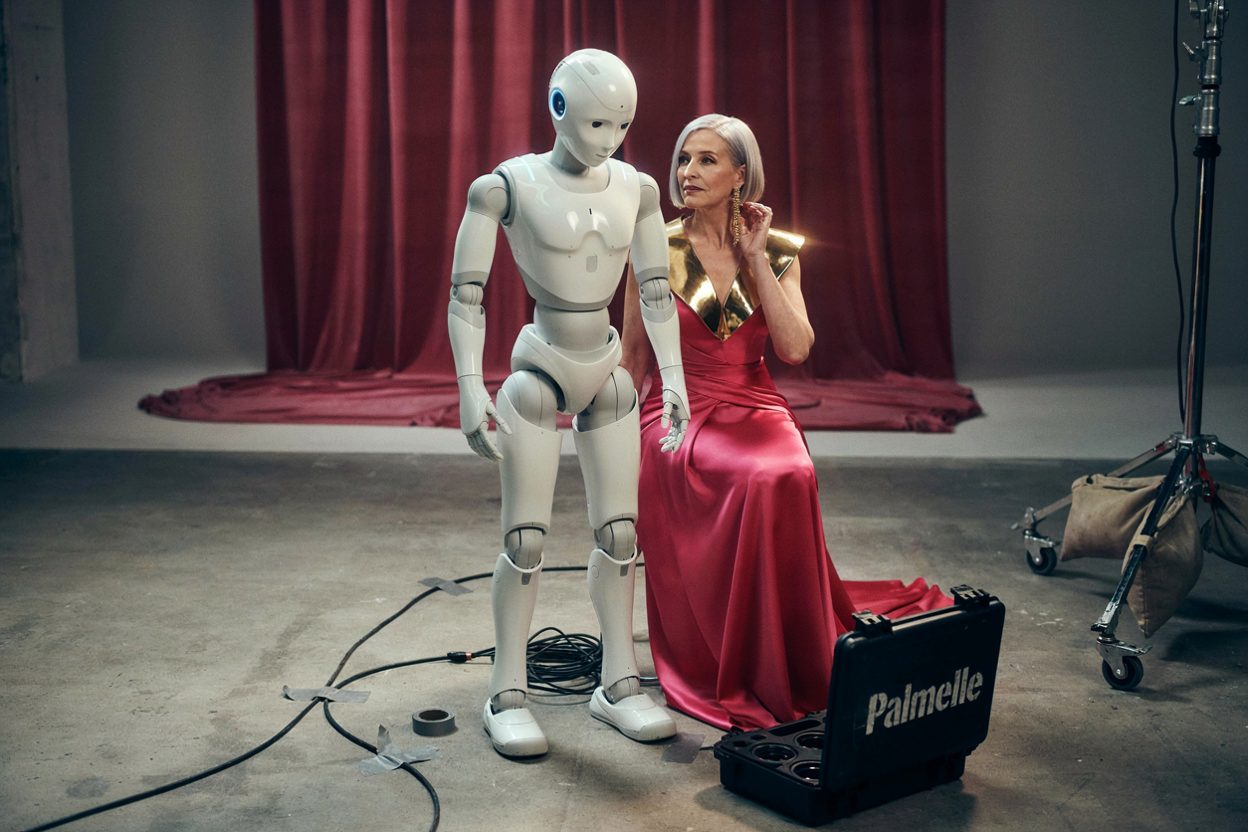
Humanoid Robots: A $20,000 Helper or a Costly Burden for Older Adults?
Mainstream tech coverage heralds a new era of convenience, but the true cost and limited autonomy of consumer robots like Optimus and NEO could strain household budgets for those aged 55+.
Get Palmelle in your Google results.
One tap. Google shows our reporting higher when you search.
The news that Tesla is retooling its Fremont factory for humanoid robot production, with Optimus Gen 3 landing in Q1 2026 and potentially winding down Model S and X production as early as Q2 2026, caught my eye [c1, c2]. It’s a big shift, and the chatter online is all about the future of work and personal assistance. I saw a post from 大趙 [c3] talking about the Optimus V3 launch, and it just made me think about my mom. I was driving home after picking up her prescription refill – the usual twenty-minute detour that’s now part of my Tuesday. My mind immediately went to how this kind of coverage always frames these advancements. It’s all about the shiny new tech, the convenience, the 'revolution.' But what about the people who are actually going to be using this stuff, or more importantly, paying for it? My complaint is that the narrative conveniently skips over the financial reality for a huge segment of the population: older adults who might be looking at these robots as a way to stay in their homes longer. The industry’s standard defense is always about how these robots will provide unprecedented support and independence. They’ll say things like, 'These advancements will empower individuals to maintain their autonomy.' But here’s the kill shot: what’s the price tag on this 'empowerment'? We’re talking about devices that are likely to cost tens of thousands of dollars upfront, plus ongoing maintenance and potential subscription fees. For someone on a fixed income, or even a comfortable retirement budget, that’s not a small consideration. It’s a potential financial burden that could force difficult choices. The coverage focuses on the 'what,' not the 'who pays' or 'who can actually afford to use it effectively.' The concrete underreported move for families right now is to start researching the total cost of ownership for these emerging technologies, beyond just the sticker price. Look into service contracts, potential repair costs, and whether your insurance or any government programs might eventually cover aspects of this. Before these robots become commonplace, ask your financial advisor or an elder law attorney about how significant, long-term technology investments might impact estate planning or long-term care funding. Don't wait for the brochure; start asking the hard financial questions now.
The direct answer
The mainstream media is hyping consumer humanoid robots like Tesla Optimus and 1X NEO, set for release in 2026-2027, as a convenience revolution. However, for older adults, the critical overlooked angle is the substantial cost and potential limitations in autonomy. These robots, with estimated prices likely in the tens of thousands, could become a significant financial strain rather than a solution for aging in place. The industry narrative of empowerment often fails to address the practical affordability and long-term financial implications for a demographic often living on fixed incomes [c1, c2, c3].
The Shifting Production Landscape
The transition of manufacturing capacity towards humanoid robots signifies a major industry pivot. Tesla, for instance, is reportedly retooling its Fremont factory, with plans to wind down legacy vehicle lines like the Model S and X as early as Q2 2026 to prioritize Optimus production [c1, c2]. This aggressive redeployment of resources, as highlighted by posts from sources like Phil Beisel
Tesla is retooling the company around embodied intelligence. Optimus Gen 3 lands in Q1 2026, the first version built for mass production. Model S and X are being wound down as early as Q2 2026. Fremont capacity gets redeployed to Optimus. An “honorable discharge,” straight into… https://t.co/OfbEdvqnWE
— phil beisel link
and Tracker
From Grok “Optimus production in Fremont: Tesla is actively retooling part of its Fremont factory for humanoid robot production, shifting focus from legacy vehicle lines to robotics. https://t.co/11bbrfO39L https://t.co/DZYDyhIxuh • Current status: Model S/X production is…
— Tracker link
, indicates that these robots are moving beyond experimental phases into mass production pipelines. The timeline, with Optimus Gen 3 slated for Q1 2026 and a formal launch event potentially in late March or early April 2026
Tesla Optimus V3 Launch and Mass Production Plan Release Date: A formal V3 launch event is scheduled for late March or early April 2026, featuring a comprehensive product unveiling. Prior to this, key functionalities will be showcased in segments via video releases. Release…
— 大趙 link
, suggests that consumer availability is not a distant dream but a near-term reality. This industrial shift is the bedrock upon which the consumer market will be built.
Beyond the Hype: The Cost of 'Help'
While headlines trumpet the convenience and assistance these robots will offer, the economic reality for older adults is often unaddressed. These sophisticated machines are not expected to be cheap; initial estimates and the complexity of their engineering suggest price tags easily reaching tens of thousands of dollars. For older adults who often live on fixed incomes, or who are meticulously managing retirement savings, such an investment represents a significant financial undertaking. The 'convenience revolution' could become a 'costly burden,' forcing individuals to choose between essential living expenses and the promised aid of a robotic helper, a critical financial angle largely missing from mainstream coverage.
Want more of this?
Mark Palmelle a preferred source and it shows up when you search Google.
Autonomy vs. Affordability: A False Dichotomy?
The promise of humanoid robots is often framed around enhancing autonomy for older adults, enabling them to age in place with greater independence. However, the practical application of this autonomy is directly tied to financial capacity. If the cost of acquiring and maintaining these robots is prohibitive, the 'autonomy' they offer becomes an exclusive privilege rather than a widespread solution. Furthermore, questions linger about the true level of autonomy these robots can realistically provide, especially concerning complex care needs or emergency situations, without significant human oversight or specialized programming that would further increase costs. The industry narrative emphasizes capability without fully acknowledging the economic barriers to accessing that capability.
Common mistakes
- Focusing solely on the technological marvel without addressing the economic implications.
Mainstream tech coverage often hypes new gadgets without detailing the significant upfront and ongoing costs, which is a critical factor for older adults on fixed incomes. - Assuming 'convenience' directly translates to 'improved quality of life' for all demographics.
For older adults, the financial burden of advanced technology can outweigh the perceived convenience, potentially leading to a reduction in other essential activities or services. - Overlooking the practical limitations and potential 'hidden' costs of advanced robotics.
Beyond the purchase price, maintenance, repairs, software updates, and specialized charging can add substantial, often unadvertised, expenses that impact long-term affordability.
Tesla is retooling the company around embodied intelligence. Optimus Gen 3 lands in Q1 2026, the first version built for mass production. Model S and X are being wound down as early as Q2 2026. Fremont capacity gets redeployed to Optimus. An “honorable discharge,” straight into… https://t.co/OfbEdvqnWE
— phil beisel link
and Tracker
From Grok “Optimus production in Fremont: Tesla is actively retooling part of its Fremont factory for humanoid robot production, shifting focus from legacy vehicle lines to robotics. https://t.co/11bbrfO39L https://t.co/DZYDyhIxuh • Current status: Model S/X production is…
— Tracker link
highlight Tesla's aggressive retooling for Optimus production, the narrative consistently overlooks the financial realities for a population that often relies on fixed incomes. The promised 'convenience' could easily translate into a costly burden, forcing difficult trade-offs for those seeking to age in place. The industry’s focus on technological advancement must be balanced with a realistic assessment of the economic impact on its most vulnerable potential consumers.
Frequently asked
When are consumer humanoid robots expected to be available?
Consumer humanoid robots like Tesla Optimus are targeting release in late 2026 and 2027, with initial versions like Optimus Gen 3 potentially appearing in early 2026.
What are the main financial concerns for older adults regarding these robots?
The primary concerns are the high upfront purchase price, ongoing maintenance costs, potential subscription fees, and the overall impact on fixed retirement incomes.
How might limited autonomy affect the usefulness of these robots?
If robots have limited capabilities or require constant human supervision for complex tasks, their practical benefit may be reduced, making the high cost harder to justify.
Sources



More from Money → · Back to Perch · Browse all stories
More of this, in your Google results.
Takes one tap, and it applies everywhere you search — not just this page.