
Robot Caregivers Promise Relief as 760,500 Home Health Aide Jobs Remain Open Through 2035
A projected shortage of hundreds of thousands of human caregivers is accelerating the adoption of robotic assistants for older adults, but critics question if machines can truly fill the void.
Get Palmelle in your Google results.
One tap. Google shows our reporting higher when you search.
The U.S. Bureau of Labor Statistics projects 760,500 annual openings for home health and personal care aides through 2035 [c1]. I saw that number pop up on a trade site and immediately thought about my mom, who’s been needing more help lately. I was driving back from picking up her prescription refill, the usual haul of a few minutes here, a quick call there, and my mind went straight to the logistics. Could a robot help her remember to take her meds on time? Could it spot if she’d left the stove on? It’s the kind of thought that creeps in when you’re juggling work and caregiving, and then you see a headline about robots and older adults, and you roll your eyes. The industry’s standard defense, often echoed by folks in government, is that these technologies are meant to *assist* human caregivers, not replace them. They’ll tell you it’s about augmenting capacity, not cutting staff. But here’s the kill shot: when you’re facing a deficit of nearly a million jobs, ‘augmenting capacity’ starts to sound a lot like ‘we’re out of people.’ The real fix isn’t a shiny new gadget, it’s a structural change. Think about the ‘trusted contact’ designation on bank accounts, a simple step that forces a call to family before a large withdrawal. It’s a concrete action that puts a human safeguard in place. Ask your bank about adding one for your parent’s accounts before you leave their branch next time.
The direct answer
The growing shortage of human caregivers, projected to create 760,500 annual openings for home health aides through 2035
South Korea’s New Humanoid Robot for Elderly Care At the 2026 Korea AI Expo, held in southern Seoul, KB Financial unveiled "GenP":a humanoid robot developed jointly with the AI company GENON. This humanoid robot, designed for elderly care, is built upon the Unitree G1…
— CyberRobo link
, is a primary driver for the increased development and adoption of robotic assistance in older adult care. Companies are showcasing humanoid robots designed for household tasks and companionship, aiming to fill the gap in a sector struggling with workforce availability [c2, c3, c4]. While proponents highlight robots' potential to support aging in place and alleviate strain on human staff, concerns remain about their ability to provide genuine emotional connection and comprehensive care, and whether they are truly a solution or a stopgap measure.
The Scale of the Caregiver Shortage
The projected demand for home health and personal care aides is staggering, with the U.S. Bureau of Labor Statistics anticipating 760,500 annual openings through 2035
South Korea’s New Humanoid Robot for Elderly Care At the 2026 Korea AI Expo, held in southern Seoul, KB Financial unveiled "GenP":a humanoid robot developed jointly with the AI company GENON. This humanoid robot, designed for elderly care, is built upon the Unitree G1…
— CyberRobo link
. This deficit isn't a minor inconvenience; it represents a systemic failure to support a growing population of older adults who wish to age in place. This shortfall directly impacts the ability of families and care facilities to provide consistent, quality support, creating a desperate need for solutions. The trend suggests that without significant intervention, the care gap will only widen, making the prospect of robotic assistance increasingly attractive to both providers and consumers.
Robots Enter the Caregiving Equation
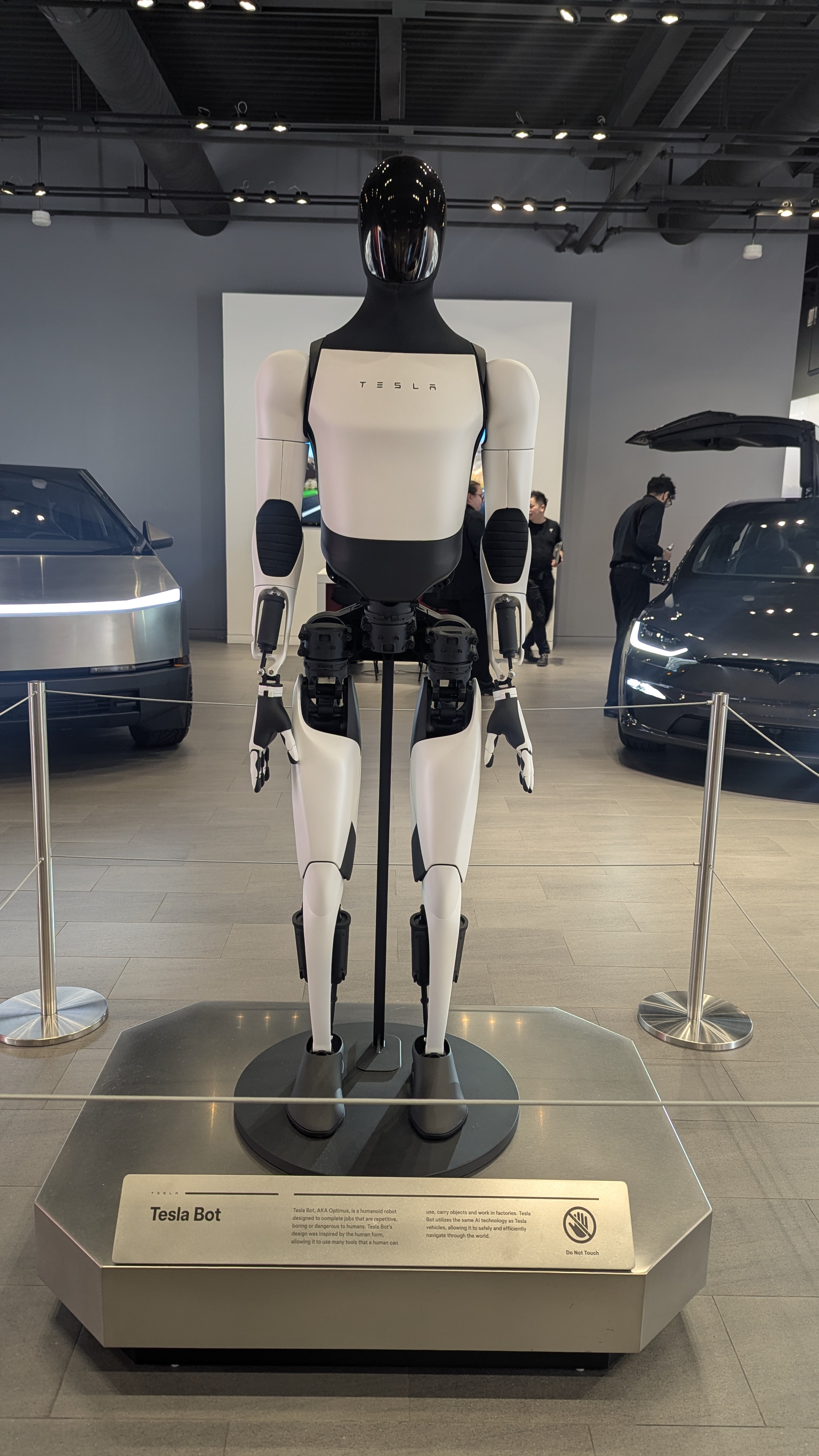
In response to this crisis, the robotics industry is rapidly developing machines for elder care. South Korea's KB Financial, in collaboration with GENON, unveiled "GenP," a humanoid robot built on the Unitree G1 platform for elderly care
South Korea’s New Humanoid Robot for Elderly Care At the 2026 Korea AI Expo, held in southern Seoul, KB Financial unveiled "GenP":a humanoid robot developed jointly with the AI company GENON. This humanoid robot, designed for elderly care, is built upon the Unitree G1…
— CyberRobo link
. Similarly, the World Artificial Intelligence Conference (WAIC) has showcased humanoid robots edging closer to household and elder care applications
Humanoid Robots Get Closer to Household, Elderly Care Application #WAIC2026 https://t.co/7kHcbKhGGt
— Yicai 第一财经 link
. Abi, a colorful and compact AI robot developed during the COVID-19 pandemic, is already piloting in U.S. Senior care homes, designed to combat isolation
Abi, the humanoid robot that's piloting in US senior care homes, was born out of the COVID-19 pandemic. Grace Brown started developing the colorful and compact AI robot to cope with isolation during COVID-19 lockdowns while studying mechatronics engineering at the University of…
— Mike Kalil link
. These developments highlight a clear industry pivot towards integrating robotics into care settings, driven by the urgent need to address labor shortages.
Want more of this?
Mark Palmelle a preferred source and it shows up when you search Google.
Wheeled Wonders and Friendly Faces
The design of caregiving robots is evolving beyond imposing metallic figures. Rivo, a wheeled humanoid robot with a modular design, is described as cute and friendly, built for home service and adaptable for elderly care and hotels
People won’t want to live alongside massive steel beasts weighing dozens of kilograms. Meet Rivo, a wheeled humanoid robot with a modular design, cute and friendly ,built primarily for home service. It can also be used in elderly care, hotels, and other service settings. This…
— CyberRobo link
. This approach acknowledges that acceptance by older adults and their families is crucial. The focus on a less intimidating, more approachable aesthetic suggests a strategy to overcome potential user resistance. The aim is to create robots that can integrate seamlessly into living spaces, offering assistance without causing alarm or discomfort, thereby enhancing the appeal of robotic care solutions.
Common mistakes
- Over-reliance on industry jargon without clear explanation.
Terms like 'augmenting capacity' can obscure the reality of workforce shortages and the potential for job displacement, making it harder for readers to grasp the core issue. - Presenting robots as a complete solution to the caregiver shortage.
While robots can offer functional assistance, they lack the emotional intelligence and nuanced judgment essential for comprehensive care, potentially leading to a depersonalized care experience. - Focusing solely on technological advancement without addressing the human cost.
The ethical implications of replacing human connection with artificial interaction, and the potential impact on the dignity and well-being of older adults, need more thorough consideration.
Abi, the humanoid robot that's piloting in US senior care homes, was born out of the COVID-19 pandemic. Grace Brown started developing the colorful and compact AI robot to cope with isolation during COVID-19 lockdowns while studying mechatronics engineering at the University of…
— Mike Kalil link
.
Frequently asked
What is the projected shortage of home health aides?
The U.S. Bureau of Labor Statistics projects 760,500 annual openings for home health and personal care aides through 2035.
What types of robots are being developed for older adult care?
Robots range from humanoid assistants designed for tasks like reminders and companionship to wheeled, modular units focused on home service and safety.
Can robots truly replace human caregivers?
Robots can offer functional support and companionship, but they cannot replicate the empathy, judgment, and complex emotional connection provided by human caregivers.
Sources



More from Robots-trope → · Back to Perch · Browse all stories
More of this, in your Google results.
Takes one tap, and it applies everywhere you search — not just this page.