
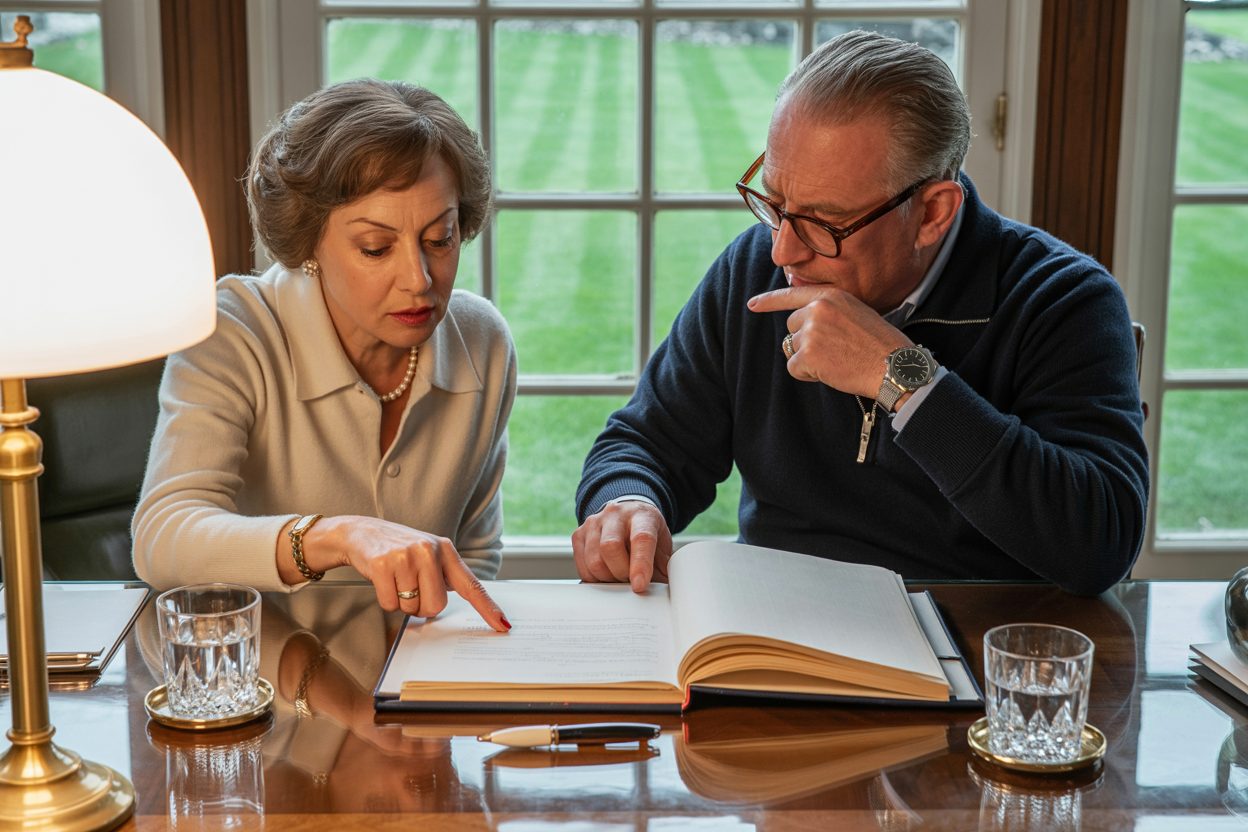
The Unspoken Power of Attorney: Starting the Talk Before They Won't
What do you do when the hardest conversations about your parents' future are the ones they refuse to have?
Get Palmelle in your Google results.
One tap. Google shows our reporting higher when you search.
Your dad, who once navigated a complex stock portfolio with ease, now struggles to remember where he put his keys. Your mom, a former powerhouse executive, has started referring to you by your sister's name. These aren't isolated incidents; they're often the slow creep of cognitive decline, a reality many families face. The thought of discussing Power of Attorney can feel like confronting a looming storm, but ignoring it guarantees a far worse deluge later.
The direct answer
Start the conversation by framing it as proactive planning, not a sign of decline. Explain that a Power of Attorney (POA) is a tool to ensure her wishes are honored, even if she becomes unable to communicate them herself. Focus on maintaining her autonomy and control by designating someone she trusts to act on her behalf.
The Cost of Waiting: More Than Just Money
Ignoring Power of Attorney discussions until a crisis hits can cost your family tens of thousands of dollars. Without a POA, a court may need to appoint a guardian or conservator, a process that can drag on for months, costing upwards of $5,000 to $10,000 in legal fees alone. During this time, your parent's finances can become inaccessible, leading to missed mortgage payments, overdue bills, and potential foreclosure. This isn't just about financial loss; it's about a loss of dignity and control for your parent, and immense stress and helplessness for you.
Consider a scenario where your father suffers a stroke. If you don't have a POA, you can't immediately access his bank accounts to pay for his rehabilitation or even his household bills. You'd be forced to petition the court for guardianship, a lengthy and emotionally draining procedure. This could mean waiting weeks, or even months, while critical decisions about his care and finances are in limbo. The POA allows a designated individual to step in seamlessly, ensuring continuity of care and financial management.
Furthermore, the absence of a POA can lead to family disputes. When decisions need to be made and no one has the legal authority, siblings might disagree on the best course of action, creating rifts that can be difficult to mend. A well-drafted POA clarifies who has the authority, reducing the potential for conflict and ensuring decisions align with your parent's known wishes. It's about providing a clear roadmap for difficult times, preventing unnecessary complications.
What 'Incapacity' Actually Means
When we talk about incapacity, we're not just referring to a diagnosis of dementia. It's a legal determination, usually made by a doctor, that someone can no longer understand the nature and consequences of the decisions they are making. This can happen suddenly, like after a fall or a serious illness, or it can be a gradual process. Your parent might be able to hold a conversation but unable to grasp the implications of signing a contract or managing their investments.
It's crucial to understand that a POA is only effective when your parent is mentally competent. This means the conversation and the document signing must happen *before* they reach a point where they can't legally sign. This is why it's so important to have these discussions early, even if your parents seem perfectly fine. You're not planning for their immediate inability, but for the possibility that it *could* happen.
Think of it like buying fire insurance for your house. You don't wait for the fire to start to get insurance. You get it in advance, as a precaution. A POA is the same principle for your parents' financial and legal well-being. It's a proactive step that ensures their assets and decisions are managed according to their wishes, without the added burden of a court process during a crisis.
Want more of this?
Mark Palmelle a preferred source and it shows up when you search Google.
The Art of the 'Gentle' Conversation
Approaching this conversation requires empathy and a clear understanding of your parent's personality. Instead of saying, 'We need to talk about your will,' try something like, 'Mom and Dad, I was reading an article about how important it is to have our affairs in order, and it got me thinking about us. What are your thoughts on making sure your wishes are clear, no matter what happens?' Frame it as a way to protect them and ensure their legacy is handled as they'd want.
It’s also helpful to share your own plans. You might say, 'I've been working with an attorney to get my own POA in place, and it made me realize how important it is for all of us to have this sorted.' This normalizes the process and makes it feel less like an accusation or a sign of weakness on their part. Focus on the benefits: peace of mind for them, and clarity for you.
When discussing who should be the agent (the person who holds the POA), emphasize trust and capability. It doesn't have to be you; it could be a sibling, a trusted friend, or even a professional. The key is that the person chosen understands your parents' values and will act in their best interest. Be prepared for initial resistance; it's normal. Reiterate your love and concern, and offer to help them find an attorney or gather information. Sometimes, just knowing you're there to support them through the process is enough to open the door.
Common mistakes
- Waiting until your parent is clearly incapacitated.
This is the most common and costly mistake. Once someone is deemed legally incapacitated, they can no longer sign a Power of Attorney, forcing the family into potentially expensive and time-consuming court proceedings to establish legal guardianship. - Assuming your spouse or another relative will automatically have legal authority.
Without a POA, your spouse or children have no inherent legal right to make decisions about your finances or property if you become unable to do so yourself. This can create immense stress and legal hurdles during an already difficult time.
Frequently asked
What's the difference between a financial POA and a healthcare POA?
A financial Power of Attorney (often called a Durable Power of Attorney for Finances) grants someone the authority to manage your financial assets, pay bills, and make investment decisions. A healthcare Power of Attorney (also known as a healthcare proxy or advance directive) designates someone to make medical decisions on your behalf if you're unable to communicate them yourself. Both are crucial and often established concurrently.
Can I change my mind after setting up a POA?
Yes, as long as you are mentally competent, you can revoke or change your Power of Attorney at any time. This is why it's important to have these documents reviewed periodically, especially if your circumstances or your chosen agent change. You would need to formally notify the agent and any relevant institutions of the change.
What if my parent refuses to sign a POA?
If your parent is adamant and legally competent, you cannot force them to sign a POA. In this situation, your only recourse if they later become incapacitated is to petition the court for guardianship or conservatorship. This process can be lengthy, costly, and emotionally taxing, and the court will ultimately decide who has authority over their affairs.
Sources
- American Bar Association: The Power of Attorney: A Legal Tool to Plan for Incapacity — Explains the function and importance of POAs.
- AARP: Power of Attorney: A Legal Document — Provides practical advice on POAs and the importance of proactive planning.
- U.S. Senate Committee on the Judiciary: Statement on Guardianship Abuse — Highlights the complexities and potential costs of court-appointed guardianship when POAs are absent.



More from The Conversation → · Back to Perch · Browse all stories
More of this, in your Google results.
Takes one tap, and it applies everywhere you search — not just this page.