
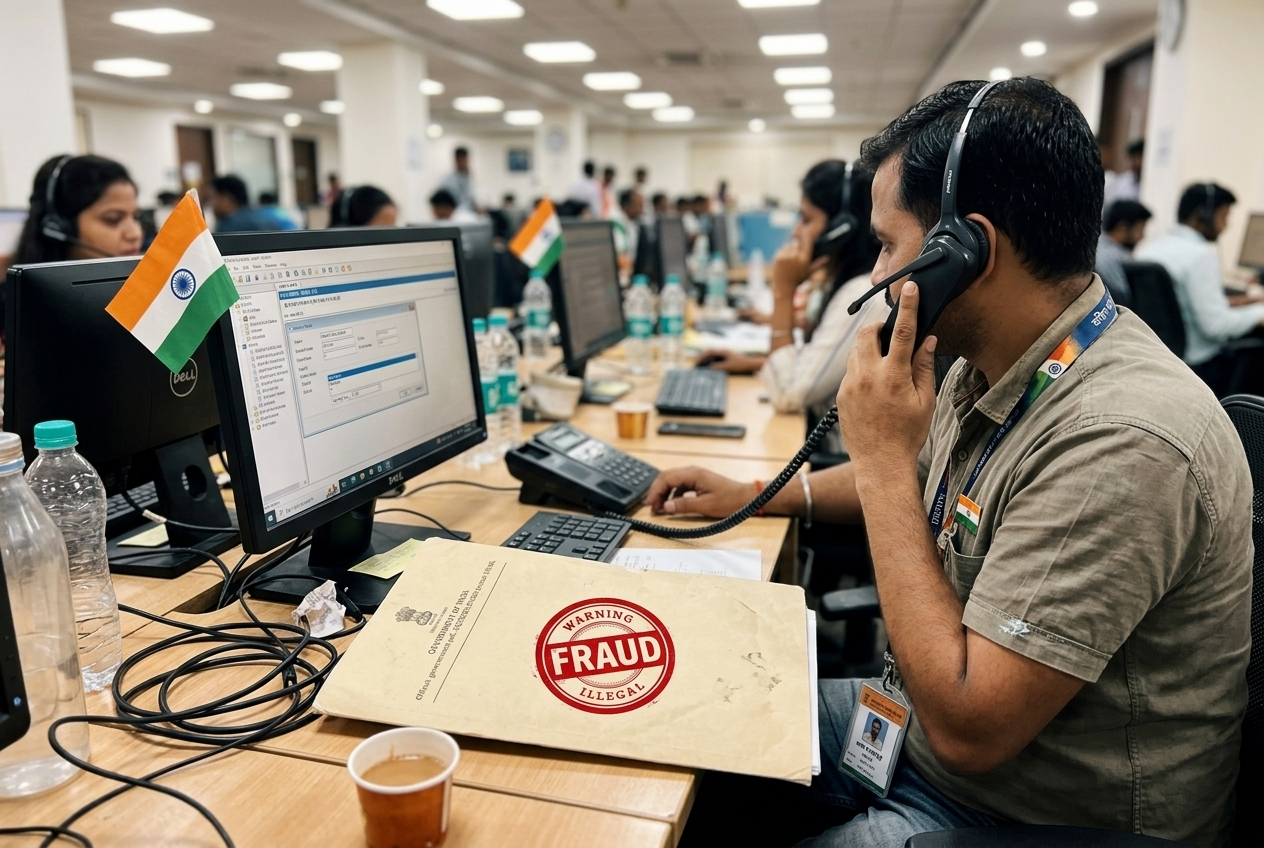
AI Scammers Exploit Airport Chaos, Targeting Seniors with Fake Support and Data Theft
Forget general travel tips; a new wave of sophisticated scams leverages AI to prey on seniors' anxieties at the airport, leading to devastating financial and identity losses.
Get Palmelle in your Google results.
One tap. Google shows our reporting higher when you search.
The direct answer
The conventional wisdom for seniors traveling often focuses on packing tips or avoiding peak hours. However, a new, AI-enhanced scam is emerging that specifically targets older travelers within the airport environment itself. These sophisticated operations create fake customer service kiosks or impersonate airline staff, using AI to mimic legitimate communication and exploit common travel anxieties. Scammers may offer 'help' with rebooking flights or baggage issues, but their true goal is to steal personal information, including passport details, credit card numbers, and even login credentials. This data theft can lead to immediate financial losses and long-term identity fraud. For instance, a scammer could harvest your banking details by posing as a helpful airline agent to 'verify' your identity for a supposed flight change
Iran IRGC: Must control the entire Hormuz Strait in wartime - IRIB
— FinancialJuice link
. The Treasury's recent revocation of Iran-related waivers also highlights the complex geopolitical landscape that can indirectly impact travel security and create opportunities for bad actors
*TREASURY REVOKES JUNE 21 IRAN-RELATED WAIVER https://t.co/AosWtpvlRS
— zerohedge link
. Travelers, especially seniors, must be acutely aware that seemingly helpful airport personnel or support lines could be part of an elaborate AI-driven deception aimed at emptying their bank accounts or ruining their credit.
The AI Advantage for Scammers
Artificial intelligence has become a powerful tool for fraudsters, enabling them to create highly convincing scams at an unprecedented scale. AI can generate realistic voice simulations, craft persuasive text messages, and even power chatbots that mimic genuine customer service interactions. For airport scams, this means fake airline support lines can sound eerily authentic, and phishing attempts embedded within fake Wi-Fi networks can be tailored to individual travelers' perceived vulnerabilities. Scammers can use AI to analyze stolen data to further personalize their attacks, making it harder for victims to discern real from fake. This sophistication is a stark departure from older, less advanced scams, making vigilance more critical than ever. The ability to mimic official communication channels means that a traveler seeking help with a delayed flight might inadvertently be communicating with an AI designed to extract their credit card number
Iran IRGC: Must control the entire Hormuz Strait in wartime - IRIB
— FinancialJuice link
. The speed at which AI can process information also allows scammers to adapt their tactics rapidly, staying one step ahead of traditional security measures.
Exploiting Travel Anxiety and Confusion
Airports are inherently stressful environments, especially for seniors who may have less familiarity with modern travel technologies or experience heightened anxiety about navigating complex systems. Scammers weaponize this anxiety. They might target individuals who appear confused or distressed, offering unsolicited 'help' with booking issues, gate changes, or baggage claims. This 'generous' offer often comes with a request for personal information under the guise of 'verification' or 'processing.' For example, a scammer might approach a senior looking at a departures board and offer to 'assist' with a supposed flight change, asking for their booking reference and then probing for more sensitive data. The recent news of Klay Thompson's cryptic response about his future with the Warriors
Fan: “We miss you on the Warriors.” Klay Thompson: “Never say never.” 🍿 (via la_tinapr / TikTok)
— Legion Hoops link
might seem unrelated, but it highlights how misdirection and carefully crafted messages can be used to influence perception – a tactic scammers employ in a far more malicious way. The goal is to create a sense of urgency or helpfulness that overrides a traveler's natural caution.
Want more of this?
Mark Palmelle a preferred source and it shows up when you search Google.
The Double Threat: Financial Loss and Identity Theft
The immediate fallout from these AI-powered airport scams is often significant financial loss. Victims may find their credit cards maxed out, bank accounts drained, or fraudulent charges appearing shortly after their encounter. However, the long-term consequences of identity theft can be even more devastating. The personal information stolen – names, addresses, dates of birth, passport numbers, social security numbers – can be used by criminals to open new accounts, take out loans, or commit other crimes in the victim's name. This can take years to untangle and can severely damage a person's credit score and reputation. The Treasury's decision to revoke certain Iran-related waivers
*TREASURY REVOKES JUNE 21 IRAN-RELATED WAIVER https://t.co/AosWtpvlRS
— zerohedge link
underscores the dynamic and sometimes unpredictable nature of global affairs, which can indirectly create environments where financial crimes, including identity theft, become more prevalent as regulations shift. For seniors, who may have accumulated significant savings or assets, the impact of such theft can be financially ruinous, potentially jeopardizing their retirement security.
Common mistakes
- Assuming all airport 'help' is legitimate.
Scammers are using AI to create highly convincing impersonations of airline staff and support systems, making it crucial to verify any assistance offered, especially when personal or financial information is requested. - Sharing sensitive information without verification.
Providing booking references, passport details, or credit card numbers to unverified individuals or systems, even if they appear official within an airport, can directly lead to financial loss and identity theft. - Ignoring the possibility of AI-driven scams.
The sophistication of AI means scams are no longer easily detectable. Travelers, particularly seniors, must understand that the 'human element' of a scam can now be convincingly faked by artificial intelligence.
Frequently asked
How do AI airport scams specifically target seniors?
These scams prey on common senior travel anxieties, such as navigating complex airport systems or dealing with flight disruptions. AI allows scammers to create realistic impersonations of helpful airline staff or support systems, making seniors more likely to trust them and share personal or financial details under the guise of 'verification' or 'processing' an issue.
What kind of information do these scammers steal?
Scammers aim to steal a wide range of personal and financial data. This includes full names, addresses, dates of birth, passport numbers, credit card details, bank account information, and even social security numbers. This information is then used for immediate financial fraud and long-term identity theft.
How can I verify if someone offering help at the airport is legitimate?
Always approach official airline desks or customer service counters directly. If approached by someone offering unsolicited help, politely decline and state you will seek assistance from an official source. Never share sensitive information on a tablet or device provided by an unknown individual. If in doubt, find a uniformed airline or airport official.
Sources


More from Consumer Protection → · Back to Perch · Browse all stories
More of this, in your Google results.
Takes one tap, and it applies everywhere you search — not just this page.